How Restaurants and Cafes Use WhatsApp and Instagram Bots to Take Orders Automatically
-
28 Apr 2026
-
3629 Views
The Problem Every Busy Restaurant Knows
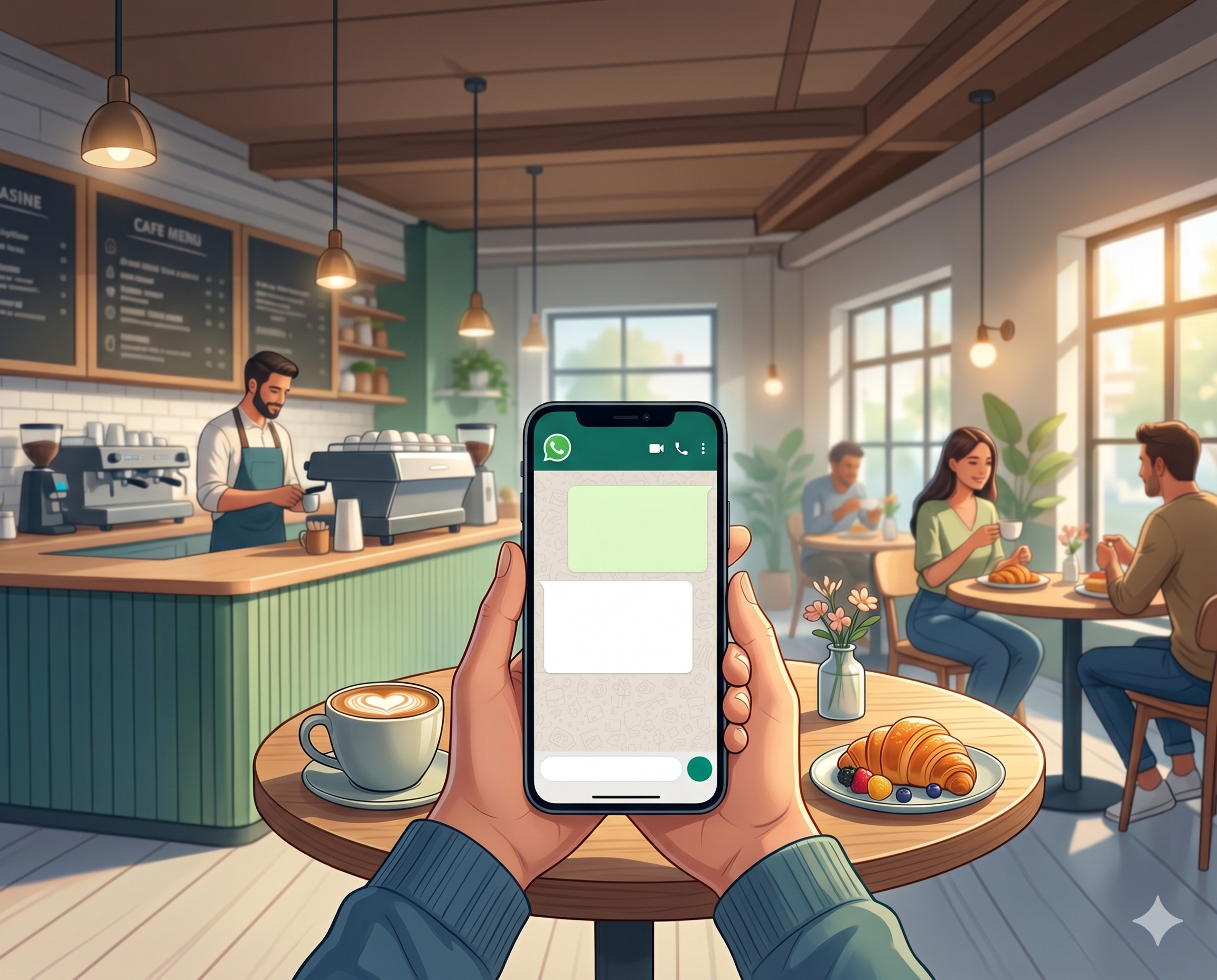
It's Friday evening. The kitchen is at full capacity. The phone is ringing every three minutes. Someone is asking what time you close. Someone else wants to know if you have gluten-free options. A third caller wants to place an order for pickup in 45 minutes — and they want extra sauce on the side.
Meanwhile, your Instagram DMs have twelve unread messages. Two are asking for the weekend menu. One is a reservation request. The rest are variations of questions your staff answers ten times a day.
And your staff is trying to seat guests, run food, and take care of the people physically in front of them. Every minute spent on the phone or checking Instagram is a minute not spent on the dining room floor.
This is the operational pressure that restaurants and cafes have managed for decades. It doesn't go away as you grow — it gets worse. More covers, more incoming messages across more channels, more complexity. The same team, stretched thinner.
WhatsApp and Instagram bots don't solve every restaurant problem. But they solve the most repetitive one: the constant stream of questions and orders that come through messaging, which someone has to handle manually regardless of what else is happening in the kitchen.
The result, when implemented correctly: a meaningful portion of your order and inquiry volume handled automatically across both channels, your staff freed to focus on in-person service, and customers getting faster responses than a phone call would ever provide.
Why WhatsApp and Instagram Are the Right Channels for Restaurant Automation
Restaurants don't get to choose which channels their customers prefer. Customers make that choice — and they've chosen messaging apps, primarily WhatsApp and Instagram.
In markets across Europe, the Middle East, Latin America, and Africa, WhatsApp is the default way people communicate with businesses. But Instagram is equally important for restaurants, because that's where food discovery happens. A customer sees your pasta dish in a story, your grilled meat on a reel, or your Sunday brunch spread in a post — and their first instinct is to DM you. That DM is an inbound lead. Whether it converts into a reservation or an order depends entirely on how fast and how well you respond.
Asking a customer to download a separate app to place an order, or to call a number that may be busy, or to navigate a clunky website on their phone creates friction. Friction means lost orders. WhatsApp and Instagram remove the friction entirely — the customer is already there, they already know how to use both apps, and messaging your restaurant feels as natural as messaging a friend.
WhatsApp messages have a 98% open rate, far surpassing email and SMS, which means order confirmations, reservation reminders, and promotional messages actually get seen. For restaurants where communication is operationally critical — a confirmation that goes unread is a no-show — this matters enormously.
The data on restaurant-specific adoption reinforces this. KFC India's WhatsApp bot processed over 115,000 orders within the first six months of launch, with orders completed via WhatsApp showing 30% lower bounce rates compared to website ordering, and repeat orders through WhatsApp customers running 18% higher than regular app users.
These aren't experimental numbers from a tech pilot. They're operational results from a business that receives millions of orders. For a full comparison of the best WhatsApp platforms for business automation, see 10 Best WhatsApp Chatbots for Business in 2026.
What a WhatsApp and Instagram Bot Actually Does for a Restaurant
The capabilities that matter for restaurants fall into two categories: reservations and customer communication. A well-configured bot handles both — across WhatsApp and Instagram DM simultaneously, from the same knowledge base.
Reservations
Table bookings follow the same logic. The customer states their date, time, and party size. The bot checks availability (if connected to your reservation system via API) or collects the request and confirms when your team reviews it. Automatic reminders go out the day before to reduce no-shows.
Customers can book a table right in WhatsApp with instant confirmations and automatic reminders, which reduces the no-show rate that costs restaurants revenue every week.
FAQ and Customer Communication
"Are you open on Sunday?" "Do you have parking?" "What are your vegetarian options?" "Is the kitchen halal-certified?"
These questions come in constantly — through WhatsApp, through Instagram DMs, at all hours. A bot trained on your restaurant's information answers them immediately and accurately on both channels — the same answer every time, with no risk of a new staff member giving outdated information.
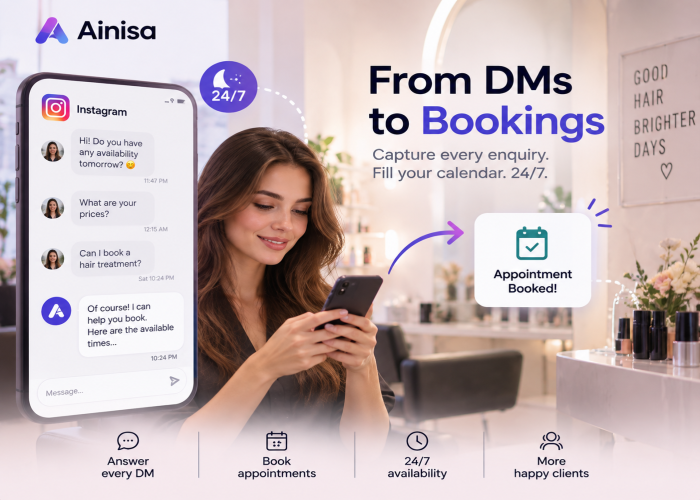
Instagram DMs are particularly important here because customers often message directly after seeing a post or story. Someone sees your weekend special on Instagram at 10pm, wants to know if they can book for Saturday — and without a bot, that message sits unread until morning. The booking goes to a competitor who responded instantly. With a bot active on Instagram DM, that inquiry is answered and the reservation is captured before the customer finishes scrolling.
During off-hours especially, this is where bots earn their keep. A customer who messages at 11pm wondering if you're open for lunch tomorrow gets an instant answer instead of silence. That answer is the difference between them coming in and looking elsewhere.
A Real Flow: How It Works End-to-End
Here's what the complete customer journey looks like through a WhatsApp or Instagram bot for a typical restaurant:
1. Customer initiates contact They send a message — through WhatsApp, or through Instagram DM after seeing a post or story. Could be "Hi", could be "I want to book a table", could be "do you have delivery?"
2. Bot greets and qualifies The bot welcomes them, introduces the restaurant briefly, and asks what they need: "Would you like to place an order, make a reservation, or do you have a question?"
3. Reservation or inquiry flow begins If they want to book a table, the bot asks for date, time, and party size, checks availability via API, and confirms instantly. If they have a question about the menu, hours, or allergens, the bot answers from the knowledge base.
4. Details collected and confirmed For a reservation: the bot confirms the booking, sends a reference, and schedules an automatic reminder the day before. For an inquiry: the customer gets a complete, accurate answer and is offered the option to make a reservation or ask anything else.
5. Returning customer recognition If it's a returning customer contacting via WhatsApp, the phone number is already authenticated at the account level — the bot can greet them by name and reference their previous visits. On Instagram, the bot recognises the account.
6. Confirmation sent The customer receives a confirmation message with all relevant details. Your team receives a notification through their chosen method.
7. Follow-up After a visit, an automated follow-up message can be sent asking for a review, or offering a loyalty discount on their next reservation. On Instagram, a story interaction or DM reply can trigger a promotional message automatically.
The entire flow, from first message to confirmed reservation, typically takes under two minutes. A phone call for the same booking takes five to eight minutes and requires a staff member's full attention throughout.
The Revenue Side: Why This Isn't Just About Efficiency
The operational benefits of messaging bots are obvious — less time on the phone, fewer missed inquiries, staff focused on service. But the revenue case is equally strong.
Inquiries that would have been lost are now captured. When your line is busy during the Friday dinner rush, a customer who gets voicemail doesn't call back. They book somewhere else. A bot has no busy signal — it handles five simultaneous conversations as easily as one. Every reservation inquiry that would have been lost to a busy line or an unread DM is now captured.
Instagram drives discovery; bots convert it. A post about your new seasonal menu reaches hundreds of people. Some of them DM you. Without a bot, those DMs wait for a staff member to respond — often hours later, often after the customer has moved on. With an Instagram bot, the DM is answered instantly and the interested customer is guided toward booking a table before they've even stopped looking at the photo. Restaurant owners using WhatsApp automation see 40% more orders during peak hours, and average order value increases by 25% when customers can engage conversationally. The same principle applies to Instagram.
Repeat business improves. A customer who had a smooth, fast messaging experience is more likely to come back — through the same channel, where the bot now recognises them. Repeat orders and reservations are the backbone of restaurant economics, and anything that makes returning easier directly improves them. Repeat orders through WhatsApp customers were 18% higher than regular app users. The same principle applies across all customer-facing industries — see How E-Commerce Stores Use AI Chatbots to Reduce Support Tickets by 80% for a parallel look at how automation improves repeat business in high-volume consumer sectors.
You own the customer relationship. When reservations come through third-party booking platforms, the platform owns the customer data. You pay a commission, you get no contact details, and the customer is the platform's customer, not yours. WhatsApp and Instagram direct contacts are yours — you have their number or their handle, you can send them promotions, and you can build loyalty without paying per-booking commissions.
The Five Things a Restaurant Bot Needs to Do Well
Not all bots are created equal. For restaurant automation to work at a level that actually reduces manual work, five things need to be right.
1. Accurate knowledge base answers "Do your lamb dishes contain gluten?" "Is the terrace open in winter?" "What's the minimum group size for the private dining room?" A bot that gives a wrong answer — or says "I don't know" — loses the customer instantly. The knowledge base needs to cover the real questions customers ask, including the specific phrasing they use across both WhatsApp and Instagram.
2. Live availability for reservations A bot that can only collect reservation requests without checking availability creates more work — you gather the request and then have to call the customer back to confirm or decline. API integration with your reservation system lets the bot check and confirm in real time. No back-and-forth, no phone call required.
3. Seamless cross-channel behaviour A customer might see your Sunday brunch post on Instagram, DM you to ask about the menu, and then follow up on WhatsApp to book. The bot needs to provide consistent, accurate answers on both channels — from the same knowledge base, without forcing the customer to repeat themselves.
4. Returning customer recognition For regular customers, the experience should feel personal. A bot that recognises a returning WhatsApp number can greet them by name and reference their previous visits. On Instagram, it recognises their account. This is what separates a good bot from a great one.
5. Smooth escalation There will always be requests a bot shouldn't handle — a complaint about last night's food, a complex catering inquiry, a customer who simply wants to speak to a person. The bot needs to recognise these situations and hand off cleanly, with the full conversation history preserved so the staff member has full context from the first message.
How Ainisa Handles This for Restaurants
Ainisa's approach for restaurant clients deploys the same trained agent across WhatsApp and Instagram DM simultaneously — one knowledge base, one configuration, two channels. A customer who discovers the restaurant on Instagram and books via DM has the same experience as one who messages on WhatsApp directly. The bot is consistent, accurate, and available on both.
The knowledge base handles everything informational — menu questions, dietary queries, opening hours, location, delivery zones, allergen information. Because it's built on a hybrid RAG system, it handles unexpected questions accurately: "do any of your pasta dishes contain egg?" is answered correctly without needing every possible variation pre-programmed. For a full explanation of how this knowledge retrieval works under the hood, see RAG Explained: How AI Chatbots Actually Learn from Your Business Knowledge.
API Actions handle the transactional parts — checking reservation availability in real time, looking up a returning customer's visit history and saved preferences, submitting confirmed bookings to the restaurant's calendar system. These connections mean the bot doesn't just collect information from the customer and pass it along — it actually queries and updates the restaurant's operational systems during the conversation.
Human handoff is built in: when a conversation needs a staff member — a complaint, a complex catering request, a customer who wants to speak to a person — it escalates immediately to the team inbox with the full conversation visible from the start, regardless of whether the customer was on WhatsApp or Instagram.
Because Ainisa uses a BYOK model, the AI cost for running these conversations comes directly from your OpenAI or Anthropic account at their published rates — a few cents per conversation, not the inflated per-message pricing that most platforms charge. For a restaurant handling hundreds of WhatsApp and Instagram inquiries a week, the AI cost is negligible. The platform fee is fixed and predictable. For a full breakdown of how BYOK pricing works compared to alternatives, see What Is BYOK and Why It Matters for AI Chatbot Costs.
For a broader comparison of platforms that handle restaurant automation across WhatsApp and other channels, see 10 Best AI Chatbots for Business in 2026.
What Bots Don't Replace
A restaurant is fundamentally a hospitality business. The warmth of the greeting, the attentiveness of the server, the personal recommendation from someone who knows the menu and the customer — these are the things that build loyal regulars. A WhatsApp or Instagram bot doesn't replace any of that.
What it replaces is the administrative overhead that gets in the way of hospitality: the phone calls that interrupt service, the Instagram DMs that go unread for hours, the FAQ repetition that exhausts staff and slows response times for guests who actually need attention.
The goal isn't to automate the restaurant experience. It's to automate the transactional parts so the human parts can be better.
The restaurants that implement this most effectively don't think of the bot as a cost-cutting tool. They think of it as a way to free their team to do what only humans can do — and to ensure that no reservation, no inquiry, no customer message falls through the cracks because the phone was busy or the Instagram DMs weren't checked.
Getting Started: What Implementation Looks Like
The practical path to a live bot across WhatsApp and Instagram for a restaurant involves four steps, not forty.
Step 1: Menu and policy documentation Compile your complete menu with descriptions, prices, and variation options. Add your opening hours, delivery zones, allergen information, and reservation policies. This becomes the knowledge base the bot draws from — on both channels.
Step 2: Define your reservation and inquiry flows Map out how you want reservations to work: instant confirmation via API, or collect-and-confirm manually? What information do you need from every customer? What confirmation message do they receive? This is the conversation logic the bot follows.
Step 3: Connect your systems If you want real-time reservation checking, this requires API integration with your reservation management system. The complexity depends on what system you use — many modern platforms have APIs; older ones may require a middleware connection.
For restaurants that don't have a reservation system with an API — or simply want a faster setup — Ainisa's Lead Generation Action is a practical alternative. The bot collects the customer's details (name, date, time, party size, phone number) during the conversation and automatically sends them to a Telegram chat your team monitors, or appends them directly to a Google Sheet. No API knowledge required. Your staff sees the reservation request instantly on their phone or laptop and confirms manually. It's not fully automated end-to-end, but it eliminates the manual message-reading step entirely and means no inquiry is ever missed.
Step 4: Test and launch on both channels Run the bot through realistic scenarios before going live — reservation requests, menu questions, allergen queries, off-hours inquiries. Test both WhatsApp and Instagram DM flows. Refine the responses. Then deploy — and measure the volume of inquiries handled without human intervention in the first 30 days.
Most restaurants see meaningful results within the first week. The knowledge base improves over time as you identify gaps and fill them.
➤ Try Ainisa Free — No Credit Card Required ➤ Read the Ainisa Documentation ➤ See Ainisa Pricing