How Law Firms and Consultancies Use AI Chatbots for Client Intake
-
10 Mar 2026
-
3780 Views

How Law Firms and Consultancies Use AI Chatbots for Client Intake
The Problem No One Talks About
A prospective client visits your firm's website at 9 PM on a Tuesday. They have a pressing legal question, a business problem that needs solving, or a situation they need help navigating. They look for a way to get in touch.
They find a contact form. Maybe a phone number.
They fill out the form and wait. Or they call the next morning and nobody answers.
According to the 2024 Clio Legal Trends Report, only 40% of law firms answer phone calls — down from 56% in 2019. That means six out of every ten potential clients who pick up the phone to call a law firm get no response at all. For consultancies, the picture is similar: a visitor arrives, browses your services page, has a question, and either bounces or submits a generic contact form that lands in a shared inbox.
The client intake process — the moment between a prospect's first contact and their first formal meeting — is where most professional service firms silently hemorrhage revenue. Not because they lack capable professionals, but because no one is available to engage that prospect in the moment they're ready to act.
AI chatbots are changing this. And for law firms and consultancies specifically, the opportunity is significant.
What "Client Intake" Actually Means for Professional Services
Before exploring how AI chatbots help, it's worth defining what client intake covers in a law firm or consultancy context. It isn't just collecting a name and email. A proper intake process typically involves:
For law firms:
- Initial triage — understanding what type of legal matter the prospect has
- Conflict of interest screening — checking whether the firm can represent this client
- Practice area routing — directing the inquiry to the right attorney or team
- Basic qualification — is this matter within the firm's geographic scope and area of expertise?
- Information gathering — collecting facts about the situation before the consultation
- Appointment scheduling — booking the first consultation
- Retainer and documentation — onboarding paperwork before the relationship formally begins
For consultancies:
- Service fit assessment — does this prospect's challenge match what the firm offers?
- Budget and timeline qualification — is this engagement viable?
- Industry and size context — capturing details that inform how the firm would approach the work
- Decision-maker identification — who else is involved in the buying process?
- Expectation setting — communicating what working with the firm looks like
- Discovery call scheduling — booking the first substantive conversation
In both cases, this process has traditionally been handled by a combination of receptionists, paralegals, account managers, and administrative staff — all of whom are expensive, unavailable after hours, and inconsistent across interactions. AI chatbots can automate most of this layer without replacing the human expertise that follows.
Why AI Adoption in Legal and Professional Services Is Accelerating
The numbers tell the story clearly. AI adoption among legal professionals jumped from 19% in 2023 to 79% in 2024, according to Clio's annual Legal Trends Report — one of the fastest adoption curves ever recorded in a traditionally conservative industry. A Thomson Reuters global survey found that 45% of law firms either actively use generative AI or plan to make it central to their workflow within the year.
The driver isn't novelty. It's economics. The same Clio report found that firms that implemented online client intake tools had 50% more incoming potential clients and earned 50% more revenue on average compared to firms that didn't. The intake process, long treated as administrative overhead, turns out to be one of the highest-leverage points in the entire client acquisition funnel.
For consultancies, the dynamic is similar. When a prospective client arrives ready to engage and encounters friction — slow responses, generic forms, a two-day wait for a reply — the window closes. Many simply move on to the next firm in a Google search result. The firm that responds immediately, asks intelligent questions, and books a call before a competitor even sends an acknowledgement email wins the work.
What an AI Chatbot Actually Does at the Intake Stage
The key distinction to make upfront: an AI chatbot in a legal or consulting context is not practicing law or providing advice. It is handling the administrative and informational layer that precedes professional engagement. This is an important boundary — and a useful one.
Within that boundary, a well-configured AI chatbot can do a substantial amount of work:
1. Immediate Engagement, Any Hour
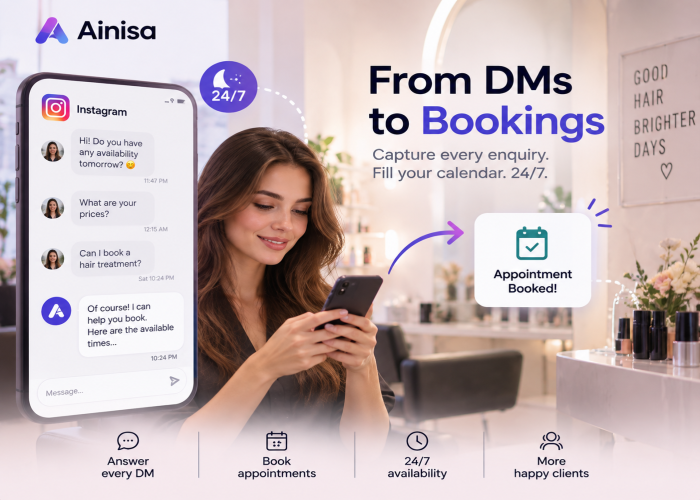
The most straightforward value is availability. When a prospect lands on your website at 11 PM, an AI agent greets them, asks what brings them in, and begins gathering the information your intake team would need the next morning. By the time your team arrives, a structured summary is waiting — prospect name, contact details, matter type, and key facts — ready for a qualified attorney or consultant to review and respond.
For firms that have been missing 60% of inbound calls, this alone represents a meaningful improvement in lead capture.
2. Intelligent Triage and Practice Area Routing
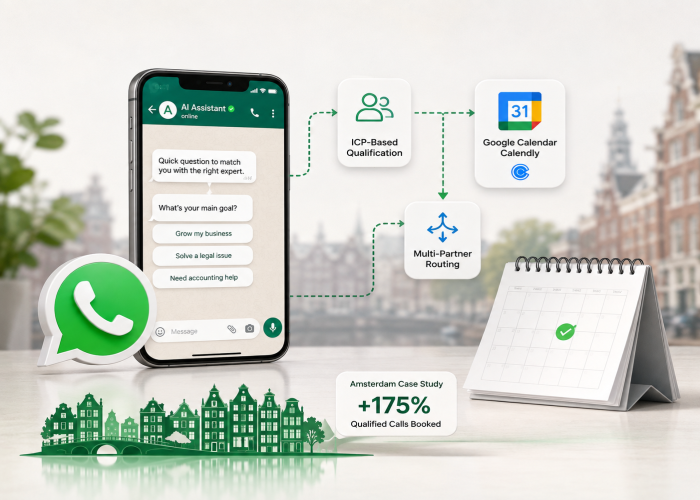
A law firm handling personal injury, employment law, and corporate contracts doesn't want every inquiry landing in the same inbox. An AI chatbot can ask a structured set of qualifying questions — "What type of legal matter are you dealing with today?" — and route the conversation to the appropriate intake queue or team member based on the response.
For a multi-practice firm or a consultancy offering different service lines (strategy, finance, digital transformation), this routing function ensures that inquiries arrive at the right desk with the right context, rather than being forwarded manually after a generic catch-all form is submitted.
3. Conflict of Interest Pre-Screening
For law firms, the conflict check is one of the first non-negotiable steps in intake. While a final conflict check must always be conducted by a qualified professional, an AI chatbot can collect the initial information needed to run that check — names of opposing parties, related entities, jurisdictions — and flag this for review before the first consultation is scheduled.
This doesn't replace the attorney's judgment. It accelerates the process and ensures the data is captured consistently, regardless of which staff member would otherwise be handling the call.
4. Lead Qualification for Consultancies
Consulting firms often struggle with a different intake problem: too many inquiries that aren't a fit. A prospect arrives asking for "strategy consulting" when what they actually need is a fractional CFO. A company wants a digital transformation engagement but has a budget of $5,000.
An AI agent can ask the qualifying questions that reveal fit before any human time is invested: What's the size of your organization? What's your timeline? What outcome are you trying to achieve? Have you worked with a consultancy of this type before? The agent captures this data, scores the inquiry informally against your ideal client profile, and routes high-fit prospects to a priority queue while flagging low-fit inquiries for a lighter-touch follow-up.
5. Information Gathering Before the First Consultation
One of the most time-consuming aspects of a first client meeting — whether with a lawyer or a consultant — is the time spent gathering basic background information that could have been collected in advance. An AI chatbot can collect this systematically before the consultation, presenting the practitioner with a structured brief: who the client is, what they need, relevant context, and any documents they've been asked to upload in advance.
The first meeting becomes more productive. The practitioner arrives prepared. The client feels the firm is organized and competent from the very first interaction.
6. Appointment Scheduling and Calendar Integration
Once an inquiry has been triaged and qualified, the AI agent can present available appointment slots and book the consultation directly — integrating with the firm's calendar system via API. No back-and-forth emails. No "let me check with the attorney's assistant." A confirmed appointment, with automated reminders, booked in the same conversation.
7. Setting Expectations and Answering Service Questions
Prospects often have questions before they commit to a consultation: How much does an initial consultation cost? What does working with your firm look like? Do you handle cases in my state? What should I bring to our first meeting?
These are answerable questions that don't require a lawyer or senior consultant to respond — and they're exactly the kind of questions that currently pile up in email inboxes or get answered inconsistently across phone calls. An AI agent trained on the firm's service descriptions, fee structures, and process documentation handles this layer completely, consistently, and at scale.
The Multichannel Intake Problem
Here's a dimension most intake discussions miss: your prospects don't all arrive the same way.
Some find you through Google and land on your website. Others reach out via Instagram after seeing a sponsored post. Some message your firm on WhatsApp — increasingly common in markets across Europe, Latin America, the Middle East, and Southeast Asia. Others find you on Facebook or connect via Telegram. In some markets, TikTok is now a meaningful source of inbound inquiry.
Traditional client intake systems — even sophisticated ones — are built around a single point of entry: the website contact form or the phone call. The prospect who messages your Instagram page gets a delayed, inconsistent, or no response. The person who sends a WhatsApp message to your business number gets a reply days later when someone happens to check it.
An AI agent that works across all of these channels simultaneously — and uses the same trained knowledge base regardless of which channel the prospect uses — solves this problem entirely. A consultant in Dubai might reach out via WhatsApp. A law firm's Instagram post might generate inquiries from ten potential clients overnight. A TikTok video about a legal topic might drive dozens of DMs asking for a consultation. A Telegram message from a corporate prospect in Germany lands in the same workflow as an inquiry from a website visitor in London. The intake process runs identically across all of them.
Data Privacy and Compliance: Addressing the Real Concern
The most common objection from law firms and consultancies when it comes to AI adoption is data privacy. It's a legitimate concern. Client intake involves sensitive information — the nature of legal matters, financial situations, business disputes, personal circumstances. The idea of that information flowing through a third-party AI system is understandably uncomfortable.
This concern is also the reason that 41% of lawyers surveyed by Embroker cited data privacy as their primary barrier to AI adoption. And it's the reason most firms using public AI tools like ChatGPT are careful not to input client-identifying information.
There are several ways well-designed AI chatbot platforms address this:
Data residency and hosting location matter. Where is the data processed and stored? Is it in a jurisdiction that aligns with your obligations under GDPR, CCPA, or other applicable regulations? A platform hosted in the EU or UK (as Ainisa is, on DigitalOcean in London) gives European firms a straightforward answer to this question.
The BYOK model addresses the AI provider concern directly. When a firm uses its own OpenAI or Anthropic API key — rather than a platform's shared API layer — the data flows under the firm's own API agreement with that provider, not the chatbot vendor's. This is a meaningful distinction for firms that need to understand the full data processing chain.
The intake layer can be configured to minimize sensitive data capture. A well-designed intake chatbot doesn't need to know the detailed facts of a legal matter at the initial stage. It needs enough to route, qualify, and schedule. The sensitive details can be reserved for the consultation itself, which takes place in the protected context of the attorney-client relationship.
Human oversight remains essential. ABA Formal Opinion 512, published in 2024, makes clear that while AI can assist with intake, human attorney supervision is required for anything that touches legal judgment or client advice. AI chatbots for intake handle the administrative and informational layer. The professional judgment comes after.
Real-World Intake Workflows: What This Looks Like in Practice
A Solo Immigration Attorney
A solo immigration attorney serving clients across multiple jurisdictions runs a small practice with no dedicated intake staff. Prospective clients arrive through the firm's website and increasingly through WhatsApp, often asking whether their situation qualifies for a particular visa type.
Without automation: calls go unanswered during consultations, WhatsApp messages sit unread for hours, and the attorney spends the first 15 minutes of every consultation re-gathering basic information.
With an AI agent: the agent greets prospects on the website and WhatsApp simultaneously, asks whether they are inquiring for themselves or a family member, which country they are seeking to enter, and what their current immigration status is. It routes visa inquiries to the right intake queue, gathers the basic facts needed for an initial assessment, books a consultation in the attorney's calendar, and sends a confirmation with a document checklist. The attorney arrives at the consultation knowing who they're talking to and why.
A Mid-Size Strategy Consultancy
A strategy consultancy with 20 consultants works primarily with mid-market businesses across three service lines: operational efficiency, market entry, and organizational restructuring. They receive 40–60 inbound inquiries per month, of which fewer than 20% result in engagements — mostly because the qualification process is slow and inconsistent.
With an AI intake agent deployed on the website and LinkedIn: the agent asks about the business's size, industry, and the specific challenge driving the inquiry. It presents information about each service line and collects budget and timeline context. High-fit inquiries — companies with 50+ employees, a defined budget, and a specific operational problem — are immediately routed to a senior consultant with a summary brief. Low-fit inquiries receive a tailored response explaining what the firm does and doesn't handle. Discovery calls are booked before any human interaction takes place.
The result: the same inquiry volume produces more qualified discovery calls and less time spent on initial screening by senior consultants.
A Law Firm with a WhatsApp-Heavy Client Base
A personal injury law firm operating in markets where WhatsApp is the dominant messaging channel — Latin America, the Middle East, South Asia — receives most initial inquiries through WhatsApp rather than the website. Previously, a rotating team of paralegals managed these inboxes inconsistently.
With an AI agent connected to the firm's WhatsApp Business API: the agent responds immediately, in the client's language, to every incoming message. It asks about the nature of the incident, when it occurred, and whether the client has already spoken to an insurance company. It collects contact details, advises on the next steps without providing legal advice, and schedules a call with a case intake specialist. The entire interaction — from first message to booked appointment — takes under five minutes.
What to Look for in an AI Chatbot for Legal and Consulting Intake
Not all chatbot platforms are suited to the intake requirements of professional service firms. Here's what matters:
Multichannel deployment from a single agent. Intake inquiries arrive on WhatsApp, your website, Instagram, Facebook, Telegram, and TikTok. A platform that deploys the same trained agent across all of these channels ensures consistency and captures every inquiry regardless of origin.
Genuine AI, not scripted flows. Prospects don't follow scripts. They describe their situations in their own words, use the wrong terminology, and ask questions in unexpected orders. A chatbot that follows rigid decision trees will fail at the first unexpected input. A real LLM-powered agent understands natural language and handles variations gracefully.
API Actions for real integrations. Intake creates value when it connects to something — your CRM, your calendar, your case management system, your conflict-check database. A platform with genuine API Actions capability can push intake data to the right systems in real time, rather than requiring someone to manually transfer information from a form submission.
Data privacy compliance. GDPR, CCPA, and professional responsibility obligations require knowing where data is processed and stored. A platform with clear hosting location, BYOK support, and compliance documentation removes this barrier.
Human handover. Not every intake conversation should be handled entirely by the AI. When a prospect's situation is complex, emotionally charged, or requires immediate professional attention, the agent should be able to recognize this and transfer to a live team member in real time — with context preserved.
Knowledge base accuracy. The agent needs to accurately represent your practice areas, fee structures, service descriptions, and process. A platform with a strong RAG (Retrieval-Augmented Generation) system trained on your actual documents will outperform a generic chatbot that hallucinate details.
How Ainisa Handles Professional Services Intake
Ainisa is built for exactly this kind of deployment. A single AI agent is trained on your firm's knowledge base — service descriptions, FAQ documents, intake procedures, process guides — and deployed simultaneously across your website widget, WhatsApp, Instagram, Facebook Messenger, Telegram, and TikTok.
The BYOK model means your AI costs go directly to OpenAI or Anthropic at cost price — there's no per-message markup from the platform, which matters for firms processing hundreds of intake conversations per month. You connect your own API key and own the relationship with the AI provider.
API Actions allow the intake agent to connect to your CRM, calendar system, or case management platform in real time. A new intake conversation doesn't just create a form submission — it creates a CRM record, triggers a calendar booking, sends a confirmation message, and notifies the right team member, all within the same conversation flow.
The human handover feature ensures that when a conversation reaches a point requiring professional judgment — when a prospect's situation is urgent, emotionally sensitive, or outside the scope of what should be handled by an AI — the conversation transfers to a live agent with the full context of what's been discussed.
For agencies managing intake for multiple law firms or consultancies, Ainisa's multi-tenant architecture allows you to run separate agents for each client from a single platform, with isolated knowledge bases and configurations for each.
➤ See how Ainisa works for professional services at ainisa.com
Common Questions
Will clients accept being handled by an AI during intake?
Research consistently shows that clients care more about speed and responsiveness than they do about whether the initial contact was human. A prospect who receives an immediate, intelligent response from an AI agent at 10 PM is far more likely to convert than one who receives a human callback 18 hours later. The key is transparency — the agent should be clearly identified as an AI assistant, not impersonating a staff member — and a smooth handover to human professionals at the appropriate point.
What if the AI gives wrong information about our services or fees?
This is why the knowledge base training matters. An agent trained on accurate, up-to-date documents about your practice areas, fee structures, and processes will reflect that accurately. For any information that could constitute legal or professional advice, the agent should be configured to direct the prospect to a qualified professional rather than attempting to answer.
Can this handle multiple languages?
Yes. A well-configured AI agent powered by a capable LLM handles multilingual conversations natively. For law firms and consultancies operating in multilingual markets — or serving clients in languages other than English — this is a significant practical advantage over human intake staff.
Is this compliant with ABA ethics rules for law firms?
ABA Formal Opinion 512 permits the use of AI in law firms with appropriate attorney supervision. An AI intake chatbot that handles the administrative layer — qualification, scheduling, information gathering — while preserving attorney oversight for all professional judgments is consistent with these guidelines. Firms should review applicable rules in their jurisdiction and ensure their use of AI is disclosed appropriately.
Final Thoughts
The client intake process is where professional service firms win or lose business before the first conversation with a qualified professional even takes place. For law firms, the data is stark: the majority of inbound calls go unanswered, and firms that invest in intake technology generate substantially more clients and revenue. For consultancies, the intake stage determines whether the right opportunities reach the right people quickly enough to convert.
AI chatbots don't replace lawyers, consultants, or intake specialists. They handle the layer that currently falls through the cracks — the 9 PM website inquiry, the WhatsApp message that sat unread until morning, the contact form submission that waited two days for a response. They gather information consistently, route intelligently, qualify rigorously, and book appointments before a competitor has the chance to respond.
For firms ready to stop leaving intake to chance, the tools are mature, the compliance path is clear, and the ROI is measurable.
➤ Try Ainisa Free — No Credit Card Required ➤ Read the Ainisa Documentation