How Beauty Salons & Cosmetics Brands Win Local Clients: Marketing + AI Booking
-
14 Sep 2026
-
905 Views
How Beauty Salons and Cosmetics Brands Win Local Clients: Marketing and Automation That Actually Books Appointments
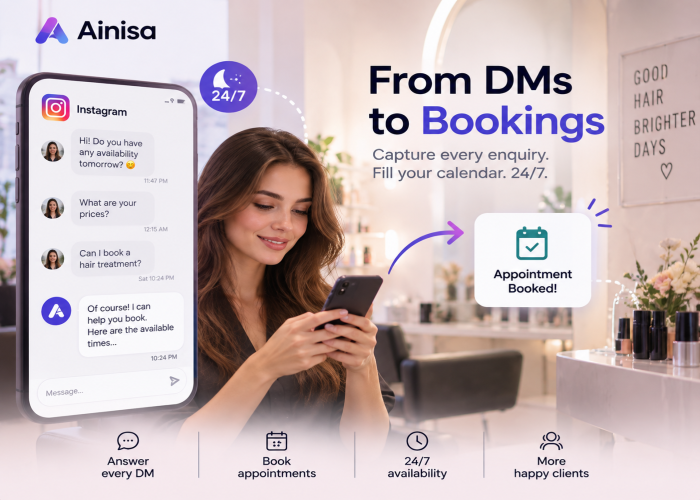
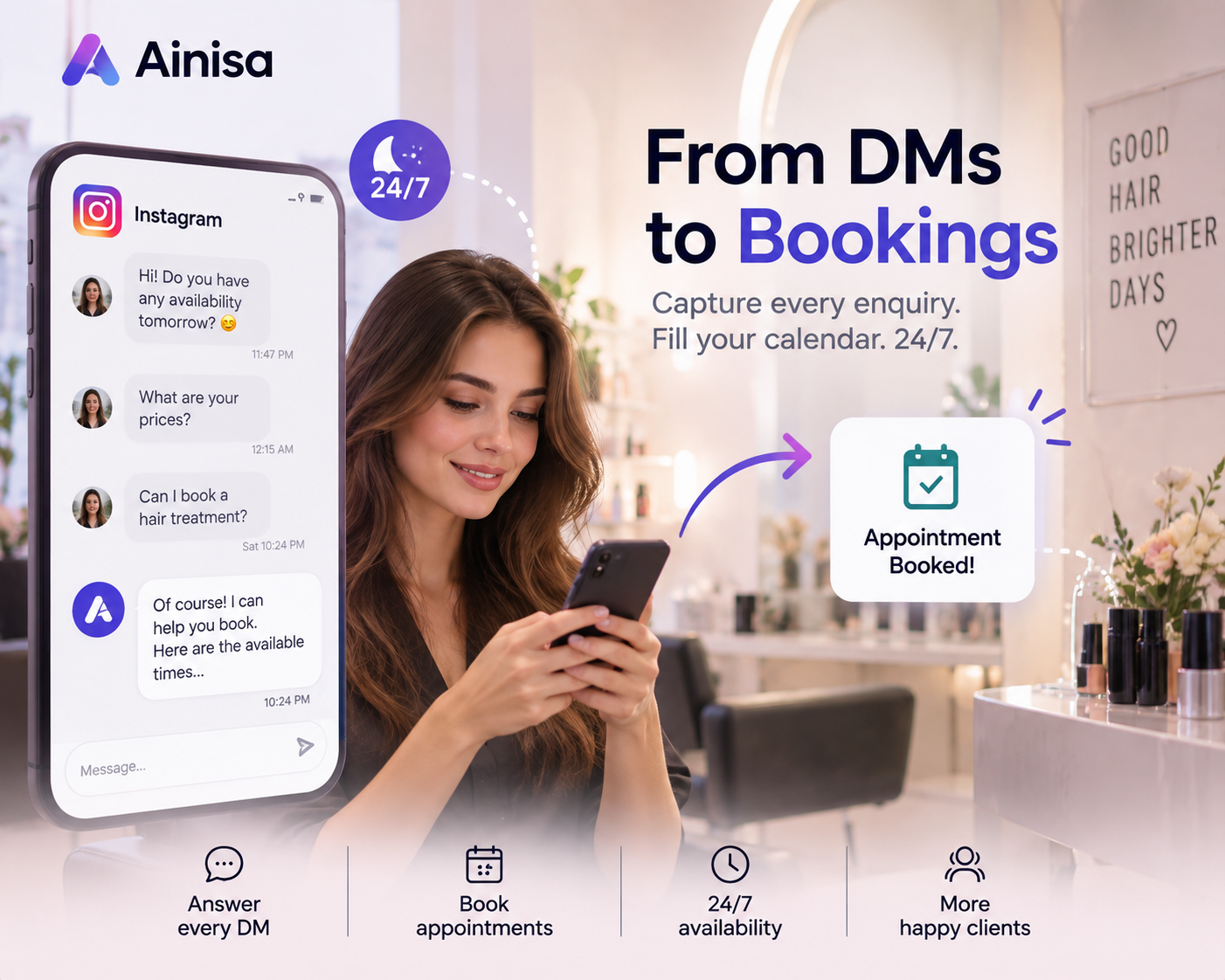
Most beauty businesses don’t lose clients because their work isn’t good enough. They lose them in the gap between “I found your salon on Instagram” and “I have an appointment booked.” A potential client sees a great balayage transformation in her feed, sends a DM at 9pm asking about pricing and availability — and by the time someone replies the next afternoon, she’s already booked somewhere else.
Closing that gap is where marketing and automation meet. This guide walks through both: the marketing fundamentals that bring beauty clients to your door, and the automation that converts them into booked appointments before a competitor does.
The buying journey for a local beauty client
Before someone becomes a client, they usually move through three stages:
Discovery. They find you through a search (“eyebrow threading near me”), a friend’s tag, or the algorithm pushing your content into their feed.
Evaluation. This is where most salons quietly lose people. Potential clients scrutinise your result photos, look for pricing, check how fast you reply, and judge your professionalism — all before they contact you. The majority of consumers check a business’s social media before visiting, and for beauty services that number climbs even higher. Your Instagram feed, Facebook page, and TikTok account are the digital storefronts where booking decisions actually happen.
Booking. Once they decide, the window is short. Beauty is an impulse-and-mood purchase. If booking is friction-free and instant, you win. If it means waiting for a reply, you lose.
Get the marketing fundamentals right first
Automation amplifies a good marketing foundation — it can’t replace one. Before automating anything, make sure these are in place.
1. A clear positioning and USP
“Natural,” “clean,” and “professional” are claims every salon and cosmetics brand makes, which means they say nothing. Your positioning has to answer why a client should choose you specifically. For a deeper walkthrough, this step-by-step guide to building a beauty brand’s USP is a solid starting point.
2. The 4Ps, applied to a beauty business
The classic marketing mix maps directly onto a salon: Product becomes your service menu and the full client experience, Price reflects your pricing strategy and perceived value, Place is your location and how easily clients can access you, and Promotion is how you get discovered. Auditing each one exposes the gaps you’re bleeding clients through. See how to apply the 4Ps of marketing to a salon business for a practical audit framework.
3. Content that builds trust before the sale
The strongest beauty content isn’t a sales pitch — it’s value. Answering the questions your clients are already searching (“best foundation for oily skin,” “how long does balayage last”) builds a relationship that starts with trust, not a discount. The same principle powers brand storytelling; this piece on storytelling in beauty content marketing shows how boutique cosmetics brands do it well.
4. Social campaigns designed to convert locally
A local salon has an advantage national chains can’t match: authentic community connection and real client transformations. Your social presence has to attract local followers, showcase results, and make booking obvious — all at once. For a full breakdown, read how to craft social media campaigns for your beauty salon.
If you want all of this in one structured programme — brand positioning, social media strategy, client retention, and pricing psychology — the Beauty Marketing Course covers it end to end for salons, skincare, and cosmetics brands.
Where marketing quietly leaks: the response gap
Here’s the uncomfortable truth. You can nail positioning, run beautiful campaigns, and drive dozens of DMs a week — and still lose most of them. Beauty enquiries arrive in the evenings, on weekends, and during your busiest appointment blocks, which is exactly when no one is free to reply.
Every unanswered “How much for a full set?” or “Any availability Saturday?” is a marketing dollar you already spent, walking out the door. The fix isn’t hiring someone to sit on Instagram all day. It’s automating the first response.
How AI closes the booking gap
This is where an AI agent earns its place. Instead of a rigid chatbot with buttons, a modern AI agent reads the actual message a client sends — in plain language — answers it, and moves them toward a booking.
On Instagram alone, a capable agent handles direct DMs, replies to your stories, people who share one of your posts and ask about it, and even clients who send a photo or short video asking “can you do this look?” It understands images and video, not just text — which matters enormously in beauty, where clients communicate in reference photos.
Critically, it doesn’t just chat. It checks your calendar and books the appointment directly into tools like Google Calendar, Fresha, Booksy, Vagaro, or Treatwell — so a DM at 11pm becomes a confirmed Saturday appointment without anyone lifting a finger. Ainisa is built exactly for this: an AI agent that answers every Instagram and WhatsApp message instantly and turns conversations into bookings around the clock.
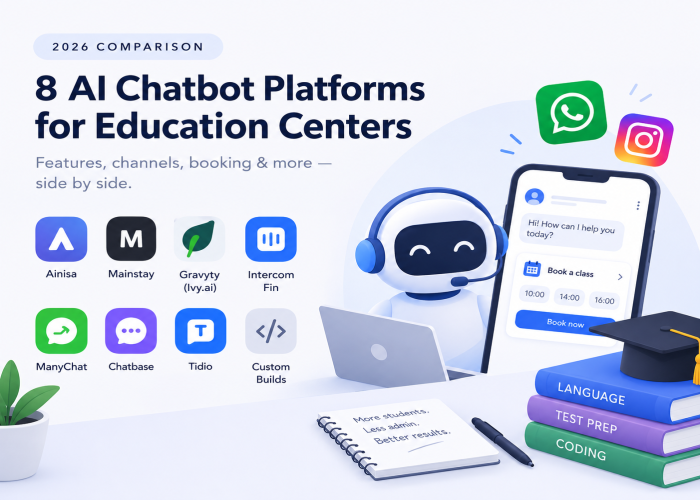
If you’re comparing options, this overview of the best AI chatbots for beauty salons and spas lays out what to look for — multi-channel support, multimodal understanding, and native booking integrations — before you commit to any tool.
Putting it together: a simple playbook
You don’t need everything at once. A realistic sequence looks like this:
- Fix positioning and your service menu so your marketing has something distinct to say.
- Run one focused social campaign that showcases real transformations and makes booking obvious.
- Connect an AI agent to Instagram and WhatsApp so no enquiry goes unanswered, day or night.
- Wire the agent to your booking calendar so conversations convert straight into appointments.
- Review weekly — which content drives DMs, and how many of those DMs the agent converts.
Marketing fills the top of the funnel. Automation stops it leaking at the bottom. Beauty businesses that get both right don’t just get seen — they get booked.
Frequently asked questions
Do I really need an AI agent, or is a booking link enough?
A booking link only works for clients who already know exactly what they want. Most beauty enquiries start with a question — price, availability, “can you do this look?” An AI agent answers those questions first, then books, which captures the large share of clients who’d otherwise drop off before reaching a booking page.
Will an AI agent sound robotic to my clients?
Modern AI agents read natural-language messages and reply conversationally, in your brand’s tone — a long way from the old button-based chatbots. They also understand photos and short videos, so a client can send a reference image and get a relevant answer, not a canned menu.
Which channels can it cover?
The ones your clients actually use for beauty enquiries: Instagram DMs, replies to stories, shared posts, and WhatsApp. That covers where discovery and evaluation happen for most local salons and cosmetics brands.
Can it book directly into the calendar I already use?
Yes — the point is to remove manual steps. An agent like Ainisa books straight into tools such as Google Calendar, Fresha, Booksy, Vagaro, and Treatwell, so a late-night DM becomes a confirmed appointment automatically.
I’m not confident about the marketing side yet. Where should I start?
Start with the fundamentals — positioning, your service menu, and one solid social campaign — before automating. A structured programme like the Beauty Marketing Course covers brand strategy, social media, retention, and pricing so your automation has a strong foundation to amplify.
How quickly can I set the automation up?
Connecting an AI agent to Instagram and WhatsApp is fast — often the same day — especially with a provider that’s an approved Meta Tech Provider, which avoids long verification waits. The marketing groundwork takes longer, but it’s what makes the automation pay off.