8 Best AI Chatbots for Beauty Salons & Spas in 2026
-
21 Jul 2026
-
2365 Views
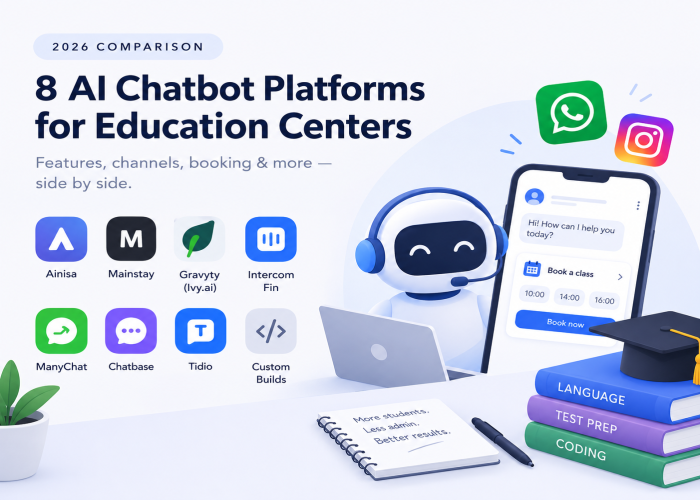
8 Best AI Chatbots for Beauty Salons & Spas in 2026 — Comparison Guide
Beauty salons and spas answer hundreds of the same questions every week — "how much is balayage?", "who does bridal makeup?", "can I get lash extensions Saturday?" — across WhatsApp, Instagram, Facebook, TikTok, Telegram, and the website. By 2026, most salons have stopped debating whether to automate this and started asking a harder question: which chatbot actually fits a beauty business?
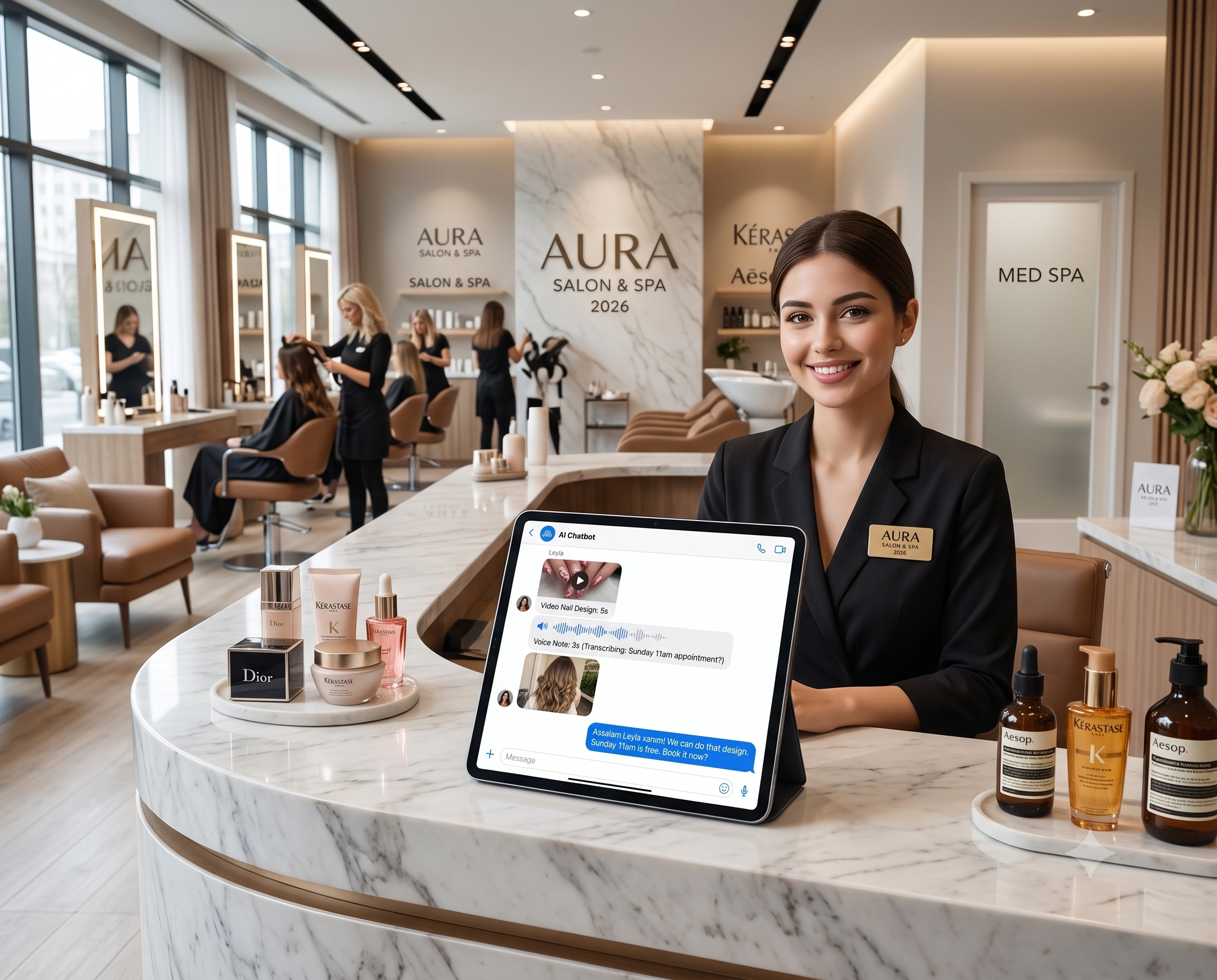
The answer isn't obvious. Most chatbot platforms are built for e-commerce or generic support, not for a salon where clients send voice notes describing what they want, photos of hairstyles they've seen on Instagram, and short videos of nail designs. A tool that only reads text misses half the inbound.
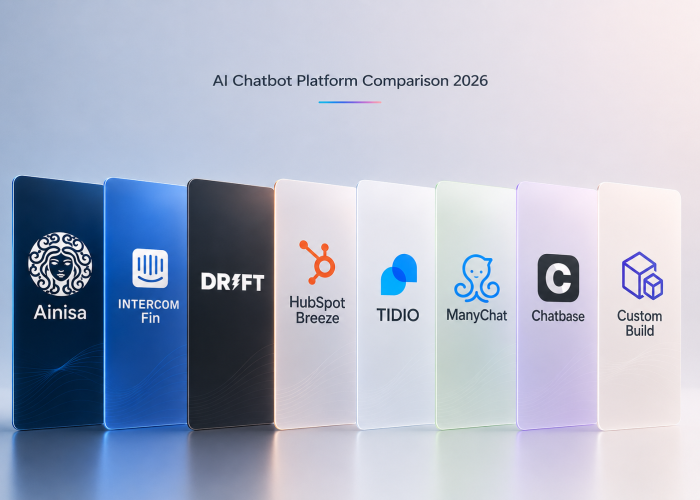
This guide compares 8 AI chatbot platforms that beauty salon owners and spa managers are actually evaluating in 2026 — what each does well, where each falls short, and which fits a small independent salon vs. a multi-location chain vs. a medical spa. Prices, integrations, and language support are as of publication and change fast; verify before you commit.
How we compared them
Six criteria, chosen because they're what makes or breaks a salon deployment:
- Beauty-specific fit — does the platform handle appointment booking, specialist matching, and service Q&A natively, or is it a generic bot you have to bend into shape?
- Multi-modal understanding — can it process voice notes, photos, and videos, or only text? By 2026 this matters for salons — clients constantly send inspiration photos and voice notes.
- Channel coverage — WhatsApp Business API, Instagram DMs, Facebook Messenger, website widget, TikTok, Telegram. Missing channels means missed clients.
- Booking integration — Google Calendar, Calendly, and salon-specific systems (Fresha, Booksy, Vagaro, Treatwell). Not through Zapier — natively.
- Multilingual support — for salons in tourism cities (Barcelona, Istanbul, Dubai, Lisbon) or serving immigrant clientele, 6+ languages natively is table stakes.
- Pricing model & data handling — pay-per-conversation vs. flat fee, UK GDPR / EU GDPR readiness, UK or EU data residency, BYOK (Bring Your Own Key) to avoid AI markup at volume.
We didn't compare "how smart is the AI" because underneath, most of these platforms call the same underlying models (GPT-4o, Claude, Gemini). What actually differs is the salon-specific plumbing around them.
Quick comparison table
| Platform | Beauty fit | Voice notes | Photos | Video | TikTok | Languages | GDPR / EU | Best for | ||
|---|---|---|---|---|---|---|---|---|---|---|
| Ainisa | ✅ Native beauty use case | ✅ Up to 5 min | ✅ | ✅ Up to 60 sec | ✅ Native | ✅ Native | ✅ Native | 8 | ✅ UK GDPR, UK residency, BYOK | Multi-channel salons w/ voice + video |
| ManyChat | ⚠️ Generic, DIY | ⚠️ Limited | ✅ | ❌ | ✅ | ✅ Best-in-class | ❌ | Templated | ⚠️ Check region | Instagram-heavy salons, marketing |
| Fresha AI | ✅ In Fresha only | ❌ | ⚠️ Limited | ❌ | ⚠️ Limited | ⚠️ Limited | ❌ | Platform-based | ✅ EU | Salons already on Fresha |
| Booksy Assistant | ✅ In Booksy only | ❌ | ⚠️ Limited | ❌ | ⚠️ Limited | ⚠️ Limited | ❌ | Platform-based | ✅ EU | Salons already on Booksy |
| Intercom Fin | ⚠️ Generic, configure everything | ⚠️ If configured | ✅ | ⚠️ Generic vision | ✅ | ✅ | ❌ | Many | ✅ EU | Multi-location chains, support culture |
| Tidio | ⚠️ Generic | ❌ | ⚠️ Limited | ❌ | ⚠️ Shallow | ⚠️ Shallow | ❌ | ~6 | ⚠️ Check tier | Website-only small salons |
| Chatfuel | ⚠️ Generic, DIY | ⚠️ Limited | ✅ | ❌ | ✅ | ✅ | ❌ | Templated | ⚠️ Check region | Messenger-heavy salons |
| Custom build (Voiceflow / Custom GPT) | ✅ If you build it | ✅ If you build it | ✅ If you build it | ✅ If you build it | ✅ DIY | ✅ DIY | ✅ DIY | Any | Your infra | In-house engineering teams |
The 8 platforms compared
1. Ainisa — best for multi-channel salons that want video and voice understanding
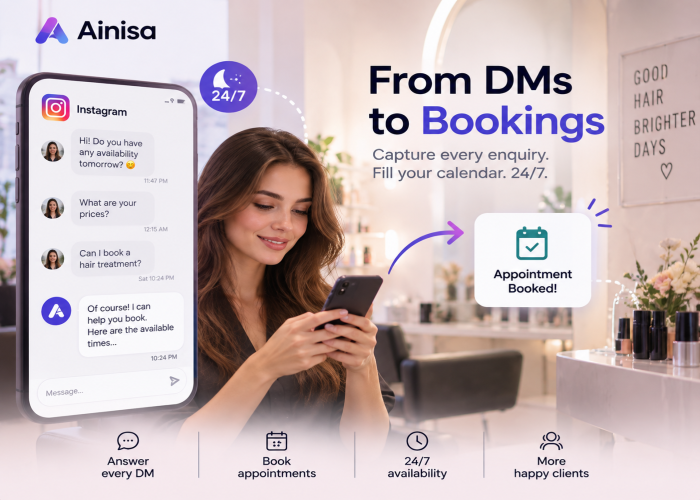
Ainisa is a Meta Business Partner platform built specifically for local service businesses, with a dedicated beauty salon & spa use case. Its differentiator in 2026 is genuine multi-modal understanding: it processes voice notes up to 5 minutes, photos, and videos up to 60 seconds — in all 8 supported languages, using a multi-model architecture (GPT-4o Vision, Claude Vision, Gemini Vision depending on your BYOK setup). Most competitors handle text plus maybe images; very few process video, and this matters more for beauty than any other vertical. A client sending a 20-second TikTok of a nail design they want, or a video of their hair asking for balayage inspiration, is normal salon inbound in 2026.
What it does well: Native WhatsApp Business API (not a Zapier bridge), Instagram DMs, Facebook Messenger, TikTok, Telegram, and website widget — all sharing one knowledge base. Handles appointment booking, specialist matching, service explanation, price Q&A, gift card and loyalty program questions, lead capture. Ships with a public demo you can chat with — send a voice note, a photo, or a video of a hairstyle and see how it responds. UK-registered company, UK GDPR-ready with UK data residency (also handles EU GDPR deployments). BYOK model means high-volume salons don't pay AI markup. No-code setup — most salons launch in a day of configuration plus 24–48 hours of Meta verification.
Where it falls short: Newer than the giants; brand recognition is smaller. Feature depth in some non-core areas (advanced marketing broadcast campaigns, deep CRM analytics dashboards) is less mature than dedicated marketing-automation platforms.
Pricing: Per-conversation pricing on the Meta side plus a monthly platform fee. BYOK keeps AI costs low. Free trial with the live demo.
Best fit: Independent salons and small-to-mid chains that get significant inbound on Instagram, TikTok, and WhatsApp, and whose clients send voice notes and videos — which in 2026 is most of them.
2. ManyChat — best for Instagram-heavy salons focused on marketing broadcasts
ManyChat is the incumbent for Instagram and Messenger automation. It's mature, has a huge template library, and is strong at marketing flows (broadcast campaigns, story reply automations, comment-to-DM triggers). Many salons already use it for lead capture from Instagram ads.
What it does well: Instagram and Messenger automation is best-in-class. Visual flow builder, big integration marketplace, strong at broadcast campaigns and abandoned-cart-style recovery flows adapted for appointments.
Where it falls short: AI understanding is add-on rather than core — the platform grew up as a rule-based flow builder and the AI layer feels bolted on. Voice note and video handling is limited compared to newer platforms. WhatsApp Business API works but the salon-specific configuration is thinner than beauty-focused platforms. No native handling of things like specialist matching or service preparation instructions — you'd build those as flows yourself.
Pricing: Tiered by contacts. Gets expensive fast at scale.
Best fit: Salons whose main channel is Instagram and who want heavy marketing automation more than deep multi-modal booking.
3. Fresha AI — best if you already run your salon on Fresha
Fresha is a widely used salon and spa management platform (booking, POS, payments, marketing). Its AI layer answers common client questions and handles simple booking flows directly inside Fresha's ecosystem.
What it does well: Zero integration work if you're already on Fresha — appointments land straight in your calendar, payment and loyalty are already tied in. Free tier is genuinely usable for basic Q&A. The salon-specific data model (services, staff, hours) is built in.
Where it falls short: The AI is thinner than dedicated conversational platforms — closer to a smart FAQ than an actual conversational agent. Multi-modal understanding (voice notes, video) is minimal. Multi-channel reach is Fresha's own client-facing surfaces plus limited external channels — WhatsApp, Instagram, and TikTok coverage is weaker than dedicated chatbot platforms. Locked into Fresha's ecosystem.
Pricing: Bundled with the Fresha subscription.
Best fit: Salons already fully committed to Fresha who want to add basic AI Q&A without adding another vendor.
4. Booksy Assistant — best if you run on Booksy
Similar story to Fresha: Booksy is a large salon management platform, and its assistant layer handles routine Q&A and booking flows inside Booksy.
What it does well: Deep integration with Booksy's booking, marketing, and payments. Client base is already used to Booksy, so the client-facing UX feels natural.
Where it falls short: Same pattern as Fresha AI — the AI is functional but not deep, multi-modal understanding is basic, and the reach beyond Booksy's own surfaces is limited. If most of your inbound comes through WhatsApp voice notes or Instagram DMs with photos, this isn't the primary tool for that.
Pricing: Bundled with the Booksy subscription.
Best fit: Salons standardized on Booksy who want the assistant layer inside the same platform.
5. Intercom Fin — best for larger multi-location groups with a support-team culture
Intercom Fin is a top-tier AI agent for customer support. Salons that operate at chain scale and think of client conversations as "support" — not just booking — often evaluate it.
What it does well: Excellent conversational AI, strong ticketing and escalation workflows, deep analytics, mature audit and compliance features. If you already run Intercom for another business line, adding Fin is straightforward.
Where it falls short: Not beauty-specific — you have to configure everything from scratch (services, specialists, booking flows, pricing knowledge). Pricing is enterprise-level and can be steep for a single salon or small chain. Native booking integrations (Google Calendar, Calendly, salon platforms) require setup work. Multi-modal handling exists but isn't marketed toward the voice-note-and-Instagram-video patterns that define salon inbound.
Pricing: Enterprise. Per-resolution pricing on top of platform fees.
Best fit: Multi-location salon groups or chains with 10+ locations and a mature ops team.
6. Tidio — best for small salons that mostly want a website chat
Tidio is a lightweight live chat + basic AI bot, popular with small businesses. Easy to set up, works out of the box on a website.
What it does well: Cheap, simple, quick to install. Fine for a salon that mostly wants a website chat widget with basic FAQ automation and human handoff.
Where it falls short: Not a multi-channel platform in any deep sense — WhatsApp and Instagram integrations exist but shallow. Multi-modal understanding is limited. Booking integrations are through Zapier for the most part, which introduces delays. Not built with beauty-specific flows.
Pricing: Cheap tiers, scales with contacts and features.
Best fit: A single-location salon whose main need is a website chat with basic AI answers.
7. Chatfuel — best if you're heavily invested in Facebook Messenger
Chatfuel is another long-established Messenger and Instagram automation platform, similar in category to ManyChat but with a slightly different flow-builder approach.
What it does well: Strong Messenger and Instagram automation, mature template library, good visual builder.
Where it falls short: Same overall shape as ManyChat's limitations — AI is add-on, multi-modal is limited, salon-specific configuration is DIY, WhatsApp support is present but thinner than beauty-focused platforms.
Pricing: Tiered plans.
Best fit: Salons whose historical channel mix is heavily Facebook Messenger.
8. Custom build (Voiceflow / Custom GPT) — best if you have engineering resources and want full control
Not a product exactly — this is the "build it yourself" option using OpenAI's Custom GPTs, Voiceflow, or a similar low-code AI agent builder tied together with Twilio for WhatsApp and Meta APIs for Instagram.
What it does well: Complete control over prompts, flows, integrations, and data. No per-conversation markup — you pay only for the underlying API calls. If you have specific proprietary workflows, this can fit exactly.
Where it falls short: You're the integrator. WhatsApp Business API onboarding, Instagram Graph API access, Meta Business Partner status, ongoing maintenance, UK GDPR / EU GDPR paperwork, and every edge case is on you. Realistic setup is weeks to months, not days. When something breaks at 10pm on a Saturday, there's no vendor to call.
Pricing: Just the API costs — but engineering time is the real cost.
Best fit: Salon groups with in-house engineering or a technical founder who genuinely wants to own the stack.
Head-to-head: what actually matters for beauty
Rather than repeating the criteria for each platform, here's how they line up on the specific things that separate a working salon deployment from a frustrating one:
Video understanding. A client sends a 15-second TikTok of a hair color they want, or a video of their current nails asking what would suit them. Ainisa handles this natively (up to 60 seconds, all 8 languages). ManyChat, Chatfuel, Tidio don't — they'll acknowledge the video but not understand its content. Fresha AI and Booksy Assistant don't. Intercom Fin has vision capabilities but they're generic, not tuned for beauty inbound. Custom builds can do it if you wire in a vision model yourself.
Voice notes. By 2026, roughly a third of after-hours salon inquiries are voice notes. Ainisa handles them up to 5 minutes in all supported languages. ManyChat and Chatfuel have limited voice handling. Fresha and Booksy assistants aren't built around it. Intercom Fin can if configured. Tidio doesn't emphasize it. Custom builds handle it if you build the pipeline.
Instagram + WhatsApp + TikTok in one platform. This trio is where beauty salons actually live in 2026. Ainisa covers all three natively. ManyChat is strong on Instagram, weaker on WhatsApp depth. Chatfuel similar. Fresha and Booksy don't own these channels. Intercom Fin is coverage-capable but not marketed there. Tidio is thin.
Native salon booking systems (Fresha, Booksy, Vagaro, Treatwell). Fresha AI and Booksy Assistant win by default in their own ecosystems. Ainisa integrates with Google Calendar, Calendly, and custom APIs to salon platforms. Others typically require Zapier bridges, which introduce lag and reliability issues.
Multilingual for tourism cities. Ainisa: 8 languages natively including language switching mid-conversation. Intercom Fin: many languages. ManyChat and Chatfuel: templated multilingual, less fluid. Fresha and Booksy: language of the platform. Tidio: basic.
UK GDPR / EU GDPR + data residency. Ainisa is UK-registered with UK data residency and handles both UK GDPR and EU GDPR deployments cleanly. Intercom Fin and Fresha/Booksy offer EU-facing options. US-first platforms (some ManyChat/Chatfuel/Tidio configurations) require checking the fine print. Custom builds — depends on your own infrastructure.
What to pick, in one sentence
- Single-location independent salon on Instagram + WhatsApp: Ainisa or ManyChat (Ainisa if voice notes and videos matter to you, ManyChat if your priority is Instagram marketing broadcasts).
- You already live inside Fresha or Booksy: Start with Fresha AI or Booksy Assistant. Add Ainisa or ManyChat later if you outgrow the native assistants for channels they don't cover.
- Multi-location chain, mature ops team: Ainisa for the beauty-specific fit; Intercom Fin if you're already an Intercom shop for another business line.
- Website chat only, small salon: Tidio.
- Facebook Messenger is your dominant channel: ManyChat or Chatfuel.
- You have engineers and want full control: Custom build — but only if this is genuinely a strategic choice, not a way to save money (it usually isn't).
What actually kills a salon chatbot deployment
Regardless of which platform you pick, three things kill deployments faster than any feature gap:
-
Not testing voice notes, photos, and videos before launch. The bot works fine in text testing, then a client sends a 45-second voice note describing what they want for their wedding and the whole thing falls apart. Test every media type in every language you support before going live.
-
Not connecting to a real calendar. A bot that answers questions but can't actually book is a fancy FAQ. Whatever platform you pick, wire it into Google Calendar, Calendly, or your salon software from day one.
-
Not updating the knowledge base. Prices change, specialists come and go, service menus evolve. A bot trained on last quarter's data will confidently give wrong answers. Schedule monthly updates or trigger them on every menu change.
Try one before you commit
Reading a comparison only tells you so much. Every platform on this list has a demo or free trial — actually use them. Send a voice note. Send a photo of a hairstyle. Send a TikTok video of nails. Book a fake appointment. Ask about a service in a second language. What separates the platforms isn't the feature list — it's how they hold up when you throw real salon inbound at them.
Ainisa's Beauty Salon & Spa AI Agent is live right now — book a fake balayage, ask about eyelash extension prices with a voice note, send a photo of a hairstyle to see how it matches a specialist, or send a video of a nail design to see how it interprets it. Every booking lands in a public Google Sheet you can open directly. Try it in any of 8 languages, and switch language mid-conversation to test how it holds up.
8 languages · Voice notes up to 5 min · Videos up to 60 sec · WhatsApp + Instagram + Facebook + TikTok + Telegram + website · Google Calendar + Calendly integrations · Meta Business Partner · GDPR ready · BYOK · No credit card for trial
Ainisa also powers AI agents for adjacent verticals:
- 🩺 Medical Clinics — appointments, patient intake, procedure Q&A
- 🦷 Dental Clinics — bookings, insurance intake, patient media handling
- 🍽️ Restaurants — reservations, menu Q&A, food orders
- 🎓 Education Centers & Academies — enrollment, course info, student support
- 💼 Consulting & Professional Services — lead qualification, discovery calls, client onboarding